Thursday, January 5, 2012
Parakeets and storm-thrashed seas
We're stuck in England in this January storm. We were supposed to return to Ireland today on the Irish Ferries' Jonathan Swift, the fast ferry, but it was cancelled. The big cruise ship was due to sail, and we packed up the car last night ready to head off this morning to Anglesey. I bought Stugeron sea sickness pills. But the rain was lashing the window when I woke and the trees are bent double. We have the dogs with us, and the thought of the poor things stuck below in the car in a gale-ridden sea (not to mention ourselves surrounded by other peoples' vomit, and maybe even our own) was enough to change to tomorrow's sailing. And I see the 14.10 cruise ship is delayed. So good decision I think.
We were in London last week visiting friends and family. As we drove through the suburbs I saw a flock of birds fly over.
'Good grief,' I said to Joe. 'I could swear that was a flock of parrots.' Later, in Stanmore in North West London, after dinner and conversation til the wee hours the night before with friends from our university days, I was taking the air in the garden. There are woods behind the house with squirrels, jackdaws, jays and a bird with a very non-native call. It was a ring-neck parakeet. They're beautiful birds and they've colonised the city.
Three appeared as we ate breakfast. And apparently there are 30,000 of them across London. 30,000! In spite of their exotic I-live-in-the-tropics looks they can survive our winters very well as they come from the foot hills of the Himalayas. They'd probably thrive in the west of Ireland too, and what a smart patriotic green they wear.
Monday, December 19, 2011
When we changed to timber
Ten years ago Joe and I were preparing ourselves for the arrival of our new boat. We found her in November and went to see her in the marina in Poole in Dorset where she was kept. She'd been having some vital repairs done, paid for by the seller as part of the deal - we didn't want a project. Here she is as we first saw her:
Burma Star was a motor cruiser constructed from timber – mahogany in the hull below and marine ply in the coach house above. The hull was white but the carvel planking showed through. The coach house with its angular aluminium 1960s windows had recently been given a single coat of matching white which didn't look good. The decks were pale blue. Our salesman told us the boat had been launched in 1969, one of the last to come out of the highly respected Rampart boat yard in Southampton.
We'd been looking for a while, had been to see a couple of boats that wouldn't do, being either too small or requiring too much work. Standing on the deck looking at Burma Star I tried to keep in my excitement. We were determined not to be caught up by the moment and buy something that wasn't right - we have a habit of doing that. The seller climbed on deck and invited us on board.
Up we climbed, marvelling at the way the boat held steady in the water. I peered into the cockpit. Lots of mahogany. A bit narrow. A proper instrument board with a light on a stalk you could bend around for night sailing. (Night sailing! Imagine! This boat could do that.) Above your head as you stood at the wheel was another board of switches, all labelled: wipers; cockpit light; nav. lights; instruments. The floor was painted an ugly blue.
We went into the saloon.
'Mind your head,' I said to Joe, an essential precautionary measure in Caoimhe, our tiny Freeman – the scab on the top of his head was generally fresh.
It was palatial. You could seat six people comfortably: three down each side. The upholstery was a royal blue with small dots of gold insignia and was, we were told, new. It looked it. There was a substantial ship's table set between the seats. Highly varnished mahogany lockers (presses or cupboards to land people) were cleverly placed for maximum storage.
You could shut off the saloon from the rest of the boat with a door that closed – there were two cabins. On the right was the galley. A two-ring hob sat above a miniature fridge, half-size sink and drainer beside it. Behind was a short section of counter. It was perfect for playing house (or boat).
Opposite the galley was the bathroom (heads in sailing-speak). Very exciting. Caoimhe had a walk-in locker containing a toilet on which, with careful manoeuvring, you could seat yourself. Here there was a toilet, a sink that pulled in and out from the wall on runners, a shower and enough space for two people to turn round.
Finally at the front of the boat was the fore cabin incorporating a V-berth: two bunks tapering into the pointy end of the boat. There was also a jolly board for linking the two together into something like a double bed so you could have jollies (contortionists only). It was all very satisfactory. I tried not to grin. I knew we'd found our boat.
Burma Star was a motor cruiser constructed from timber – mahogany in the hull below and marine ply in the coach house above. The hull was white but the carvel planking showed through. The coach house with its angular aluminium 1960s windows had recently been given a single coat of matching white which didn't look good. The decks were pale blue. Our salesman told us the boat had been launched in 1969, one of the last to come out of the highly respected Rampart boat yard in Southampton.
We'd been looking for a while, had been to see a couple of boats that wouldn't do, being either too small or requiring too much work. Standing on the deck looking at Burma Star I tried to keep in my excitement. We were determined not to be caught up by the moment and buy something that wasn't right - we have a habit of doing that. The seller climbed on deck and invited us on board.
Up we climbed, marvelling at the way the boat held steady in the water. I peered into the cockpit. Lots of mahogany. A bit narrow. A proper instrument board with a light on a stalk you could bend around for night sailing. (Night sailing! Imagine! This boat could do that.) Above your head as you stood at the wheel was another board of switches, all labelled: wipers; cockpit light; nav. lights; instruments. The floor was painted an ugly blue.
We went into the saloon.
'Mind your head,' I said to Joe, an essential precautionary measure in Caoimhe, our tiny Freeman – the scab on the top of his head was generally fresh.
![]() |
| Little Caoimhe |
It was palatial. You could seat six people comfortably: three down each side. The upholstery was a royal blue with small dots of gold insignia and was, we were told, new. It looked it. There was a substantial ship's table set between the seats. Highly varnished mahogany lockers (presses or cupboards to land people) were cleverly placed for maximum storage.
You could shut off the saloon from the rest of the boat with a door that closed – there were two cabins. On the right was the galley. A two-ring hob sat above a miniature fridge, half-size sink and drainer beside it. Behind was a short section of counter. It was perfect for playing house (or boat).
Opposite the galley was the bathroom (heads in sailing-speak). Very exciting. Caoimhe had a walk-in locker containing a toilet on which, with careful manoeuvring, you could seat yourself. Here there was a toilet, a sink that pulled in and out from the wall on runners, a shower and enough space for two people to turn round.
Finally at the front of the boat was the fore cabin incorporating a V-berth: two bunks tapering into the pointy end of the boat. There was also a jolly board for linking the two together into something like a double bed so you could have jollies (contortionists only). It was all very satisfactory. I tried not to grin. I knew we'd found our boat.
Wednesday, December 7, 2011
Lough Derg but no boat
A visit to Dromaan for dinner. We used to regularly keep Winter Solstice here for the dark season, but haven't been on Derg now for a couple of years, so it was nice to visit someone else's boat there. As second best choice, and lacking a floating vessel, we went in the van. There's not much to say except we ate well and were EXTREMELY WARM on the wonderfully revamped Knocknagow. A wonder on a chilly December night. And here's the splendid craft leaving harbour the next morning.
It was strange to be in Dromaan. We've spent so much time in and around there, either in the harbour itself or in Williamstown at Angus Leavy's. It's a lot tidier these days than it used to be with pathways and mowed grass instead of briars and gorse bushes.
I noted Imram was still there. This is a solid-looking green sailing boat that rarely seems to go anywhere, spending its time between Dromaan and Mountshannon.
The views from this harbour are among the sweetest on the lake. IMHO.
And cheerio Knocknagow. Disappearing into the sunlight.
It was strange to be in Dromaan. We've spent so much time in and around there, either in the harbour itself or in Williamstown at Angus Leavy's. It's a lot tidier these days than it used to be with pathways and mowed grass instead of briars and gorse bushes.
I noted Imram was still there. This is a solid-looking green sailing boat that rarely seems to go anywhere, spending its time between Dromaan and Mountshannon.
The views from this harbour are among the sweetest on the lake. IMHO.
And cheerio Knocknagow. Disappearing into the sunlight.
Wednesday, November 16, 2011
Spring in autumn
Spring appears to have started in my garden. Actually it started a while ago when the Raggedy Jack kale went to seed. Kale is a bienniel so should flower the year after the seed is sown. With flowers this means you don't get a display until year two. With a 'cut-and-come' cabbage family member it means you get a year of cropping before the plant is finished. Still, not to worry. There are still plenty of leaves on these plants to pick for dinner, and I'll collect the seeds to sow again next year.
More of a worry are the shrubs taking the warm weather to be permission for a show of petals. Down in the Hollow, where it's a little warmer, an azalea is about to come into flower:
The Pieris is putting on a real show.
And the Guelder Rose. Berries and flowers at the same time.
Joe mowed all the grass this week. It's still growing. But come the cold weather the flowers will all be killed. Hopefully there'll be a new batch next spring. On the positive side all this fine weather has allowed me to put the vegetable garden to bed. In the first photo you can see the black polythene on the bed behind the Raggedy Jack. This was the potato bed. A layer of muck, polythene on, and I can relax, knowing I won't be faced with a major weeding job in the spring. Polythene is no good in the ornamental garden. There it's just a matter of pulling away. The second you turn your back, of course, the buggers are back, even in the winter.
Some nice colours about:
This young beech has appeared on the other side of the river. Self-seeding is all the rage here.
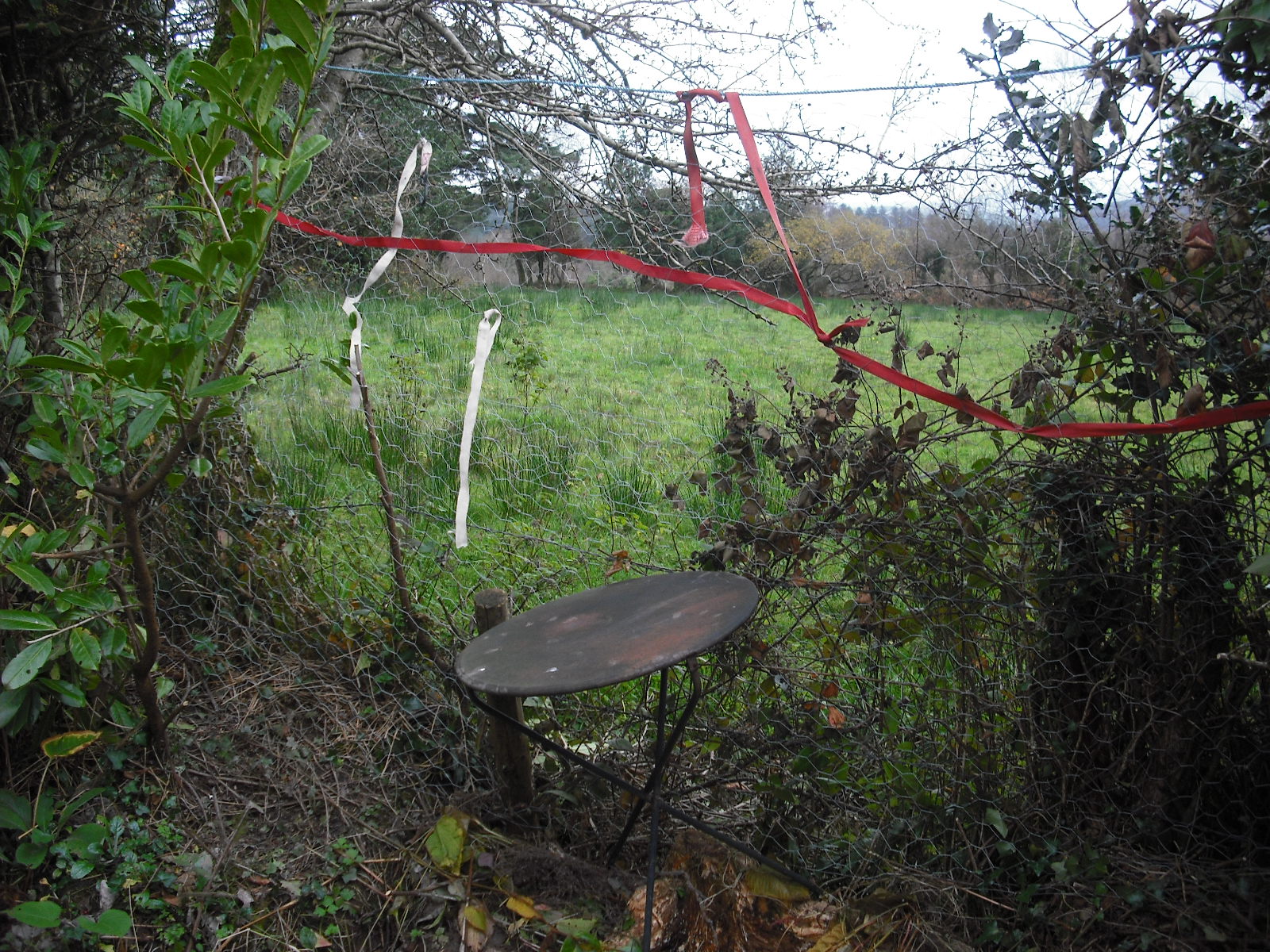
The deer were getting into the Grove on a regular basis. They'd made a proper path for themselves through a small gap in the hedge, hopping over the barbed wire. There were little hoofprints across the garden, mostly on the grass but sometimes through the flower bed. Sometimes the hoofprints stopped at the picket fence that separates the garden from the car parking area. Up and over. No bother when you've legs that long full of springs. Other times they went down through what I fondly call the orchard but is usually referred to by the presence of the septic tank. I went down to PJ Mac's and bought some chicken wire, and Joe rigged up his own version of deer fencing:
No doubt they'll be strolling in another way. I'm already planning how to protect the young apple trees in the Hollow next spring.
More of a worry are the shrubs taking the warm weather to be permission for a show of petals. Down in the Hollow, where it's a little warmer, an azalea is about to come into flower:
The Pieris is putting on a real show.
And the Guelder Rose. Berries and flowers at the same time.
Some nice colours about:
This young beech has appeared on the other side of the river. Self-seeding is all the rage here.
The deer were getting into the Grove on a regular basis. They'd made a proper path for themselves through a small gap in the hedge, hopping over the barbed wire. There were little hoofprints across the garden, mostly on the grass but sometimes through the flower bed. Sometimes the hoofprints stopped at the picket fence that separates the garden from the car parking area. Up and over. No bother when you've legs that long full of springs. Other times they went down through what I fondly call the orchard but is usually referred to by the presence of the septic tank. I went down to PJ Mac's and bought some chicken wire, and Joe rigged up his own version of deer fencing:
No doubt they'll be strolling in another way. I'm already planning how to protect the young apple trees in the Hollow next spring.
Thursday, November 3, 2011
Canal, teddy bear and Halloween newt
A London birthday weekend - my birthday this time. We were staying near the Regent's Canal again - oh joy for the walk from Shoreditch to Islington. Friday was a beautiful day. I didn't realise this photo had such great reflections - I was too busy looking at the boats and the willow tree.
Joe had arranged for us to do a house swap, though our swapees have yet to come to us - they'll do that next spring. It was a perfect place for us - part of a terrace (Georgian?) in Shepherdess Walk, everything we needed, such a lovely house, park behind, canal at one end and buses at the other. And from the roof garden this was the view:
A highlight (apart from the canal) was the Grayson Perry exhibition at the British Museum. I hadn't realised what they'd done to the museum for the Millenium. This roof over the courtyard was stunning:
Called The Tomb of the Unknown Craftsman, the exhibition had Perry's own fantabulous pots and other pieces next to astonishing craftsman(woman?)ship from within the Museum.
Here's the motorbike Perry travelled round Germany on, with his teddy bear Alan Measles in the 'popemobile' at the back (I know, it sounds weird but it wasn't).
Unbelievable detail on Perry's pieces and those he chose. And I loved his descriptions and explanations of everything. So articulate and they really did make sense of a grown man travelling with his old teddy bear and dressing up as a little girl. Hmm. That sounds weird altogether but it wasn't.
The strangest exhibit, perhaps, was the delicate earring which I was admiring in its case. I read the information about it and realised it said there was a section of ear attached. The ear was very black due to age. This was not one of Perry's works.
A play at the Almeida in Islington on Friday - 'My City' by Stephen Poliakoff which got very mixed (read bad) reviews on the BBC review show but which we loved. They just didn't understand metaphor I think (says she disappearing up her own arse). It's always different when you go to a production knowing you have to appear on television or write something erudite (not that I have) than if you go following a good dinner with the expectation of having an interesting time.
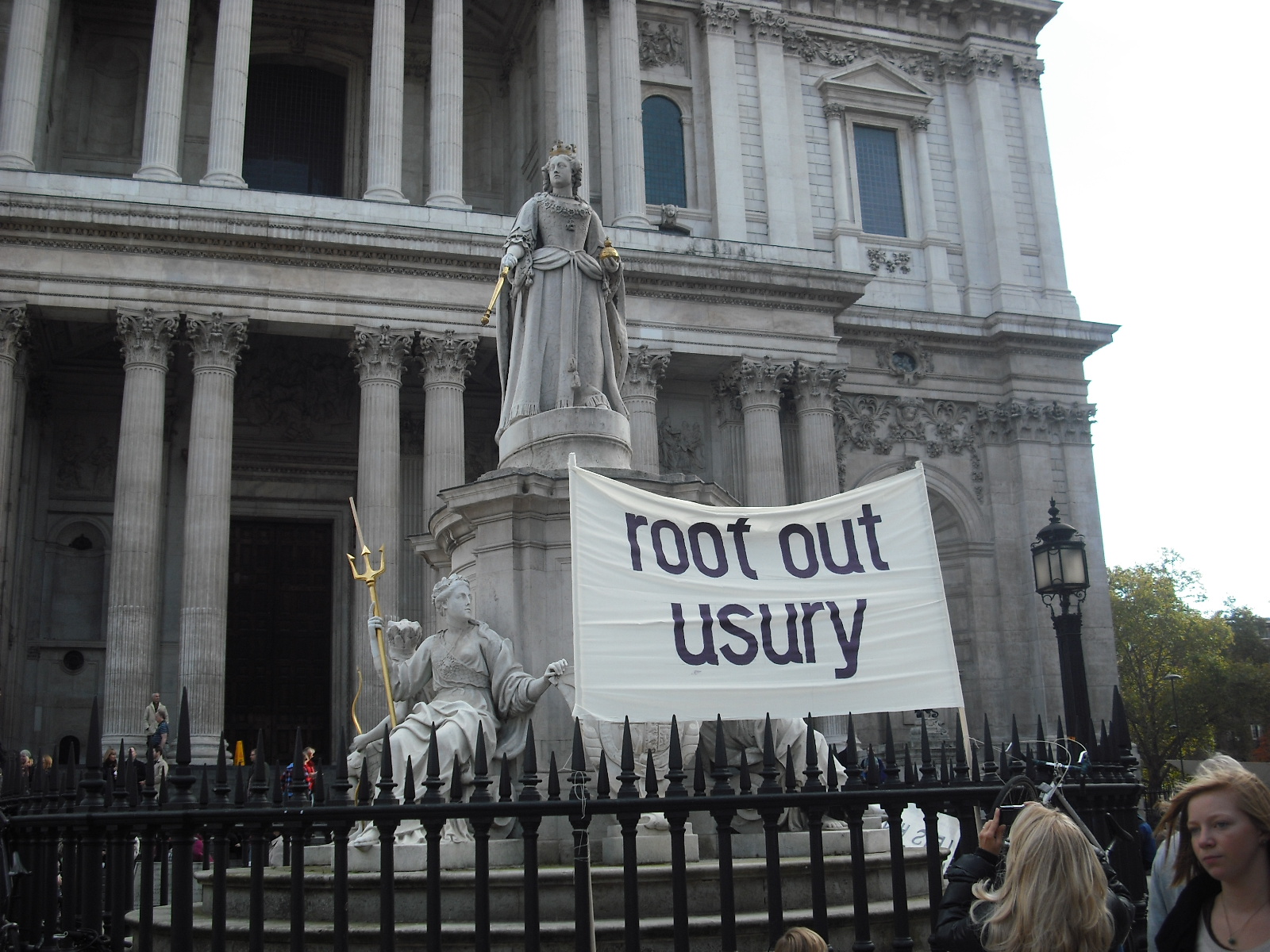
We went to the Tate Modern but found we weren't in the mood - enough, I think, of exhibitions. But we did have a look, on the way there, at the protest outside St Paul's.
I'm glad to see the Church has come to its senses and is no longer stuck in confrontation and attempts at eviction. Whatever you think about the protesters methods, how can you call yourself a Christian and not support their arguments enough to at least get into a discussion with them.
We had dinner that night at Sabor, a South American restaurant in Islington. If you live near there and haven't been (oh all you Islington readers of my blog) then go! It was wonderful. Of course you wouldn't normally have the parade of Halloweeners passing the window in various stages of dismemberment/witchery/zombiedom. A newt went past at one stage (a newt? for Halloween? Surely they're hibernating by now). After the dinner I had a chocolate martini. It was that sort of night.
Wednesday, October 19, 2011
Boats and poetry in Lorient, Brittany
There are a lot of boats in the Gulf of Morbihan on the south Brittany coast. This was in the Port de Plaisance in Lorient where I spent a long weekend. It was a poetry gig, a twin town affair between Galway and Lorient, and I definitely pulled the long straw. This photo was taken on Friday when it was overcast but 18 degrees, and things only got better. You could sit outside, watch people walk past while you drank your coffee or glass of Belgian beer, wearing sunglasses and with short sleeves.
I arrived on Thursday with Mary and Susan, the two other Galway poets (yes I know I live in Clare, but the boundaries of the city have stretched to include those who spend poem time there). Friday was busy starting with a tour of the amazing Médiathèque. This is far more than une bibliothèque, a library (don't worry - I'll get over myself soon and stop dropping in French words). You can watch films here from deeply comfortable chairs, borrow from a huge range of CDs and DVDs, consult the Internet, sit in settees in the quiet space or use a closed-off room for meetings. This is the area we were in for a two-hour session checking our poem translations with Patrick, the poet, and Nadia, his english-speaking wife. It's hard work, and I wasn't even the one doing the translations. You really understand the difference between languages, and how some things just don't translate. In the evening Patrick led a bilingual poetry workshop - well attended with eleven of us working away. It was a great success.
Another thing that doesn't necessarily translate is your order for coffee. Cappuccino came with a huge quiff of whirled cream on top. Crêpes do translate but in a most superior way. There are the wheat-flour ones, which I can't eat, and the gallettes made from buckwheat, which I can. They tip over the edge of the plate and come with various fillings. The complète has egg, ham and cheese tucked into an envelope of gallette that fits on the plate, or spread across an open gallette to spill over the sides with a salad dropped into the corner. That's the one in the picture below. There are what look like oversized tea cups on the table for the cider that is traditionally drunk with the crêpes.
Saturday was poetry reading day. Hmm. Not quite such a success. The weather, you see. It was glorious and who wants to come to a reading in a dark auditorium, even if it is in the wonder of the médiathèque. So not quite such a big audience as we'd hoped. But those who were there were very enthusiastic.
On Sunday we had a visit to megalithic tombs after a traditional Breton lunch provided by Vivianne and Agnès, long-time members of the twinning committee. We were out in the countryside in a traditional farmhouse. A bit of work going on at the moment:
All the vegetables were from the garden including seven or eight varieties of tomato which tasted nothing like anything you'd buy in a shop, even a good shop selling fresh local produce. The cider, the other tradition in the area, was home made.
There were two sites we visited. Locmariaquer has the most complete Neolithic remains. There is the broken Great Menhir (read fallen phallus):
There is also the Er Grah tumulus and the Table des Marchands cairn. Inside the cairn is a chamber with engravings. Here we all are (bar the photographer):
It was just after this that we made a cloud disappear. It took some concentration but we managed it. Pouf! Three minutes of drawing its energy with our eyes according to instruction from Pascal and it was gone. Amazing!
Trinité-sur-Mer was the next stop. I thought there were a lot of boats in Lorient but look at this:
You'd need a wide-angle lens to fit them all in. And this was looking only in one direction. There were round-the-world catamarans too:
And, my favourites, the old fishing boats:
On the way back from Trinité we drove past the many 'alignments' in Carnac. We hadn't time to stop but they were easily viewed from the road. These are extraordinary: lines of standing stones spreading over many acres.
There was an interesting thing going on with the language. It's years and years since I spent time in France and my french is very rusty. At first I was struggling in spite of working at improving my vocabulary over the last few weeks. It was all a blur. But by Saturday I was doing much better, and on Sunday it was as though a babel fish had been popped into my ear. Not all the time. It took concentration, and I needed to be in on the start of what was being said. Several people having a conversation was tricky. But I was 'zoning in' for twenty minutes at a time. It reminded me of when I first moved to this part of Clare and used to go to a local bar where the farmers drank. It's an accent that people in Scarriff down the road can struggle with. After a while, though, the words separated out and everything was clear. I'd got my ear in.
So now I'm in love with Lorient and its people. I have to keep up with the French. And Joe wants to learn for when he retires (!) and we take off in the van for a couple of months of winter warmth. Let's hope all these good intentions last.
Tuesday, October 4, 2011
Winter Solstice to Winter Berth
Grey grey grey weather in Galway at the weekend. We were parked at the docks in the camper van and the cranes were going, shifting a mountain of scrap metal into a waiting ship. They started up again in the middle of the night. It was still dark anyways. Can't have been later than 6 am. Ear plugs job.
That morning we headed to the boat after buying newspapers. In the town everyone was talking about the heat wave going on in England. The radio reported how shops were stocking barbecue stuff, and seaside hotels were booked out. People in swimming togs on beaches. Ice creams. And here we were in waterproofs, umbrellas up, wondering what we were going to do with the wet covers once we'd taken them off Winter Solstice. In the end we didn't do anything. We checked she was okay and drove north alongside Lough Allen to Enniskillen with thoughts of dinner at our favourite curry house. It did stop raining that night, but 29 degrees it was not.
We'd arranged to meet friends in Carrick-on-Shannon, so next day drove back to the boat. We'd woken to rain but it was almost dry when we got to Leitrim.
Off with the boat covers and onto the river. Ah. That was more like it. Good to be on the river again. Thoughts that this might be the last proper trip of the year. There were a lot of boats out - all thinking the same thing perhaps. Anything could happen with the weather from now on - a week of torrential rain and the Shannon will become a challenge.
Nearly got caught with winter lock times. After a night dancing in Carrick (yes! Dancing! Great blues band in the Oarsman) we were heading to our winter quarters at Albert Lock. Nearly everyone we meet around the north Shannon seems to berth at Albert Lock. It's a long, narrow marina in a slice of land between the Jamestown Canal and the railway.
We came through the lock at around 3.30, were allocated our berth and given a key fob to open the automatic gate. Owner Micheál also gave Joe a lift to Leitrim to pick up the van - great service. That's when Joe found out winter lock times had started on September 26. Not too bad on weekdays - locks close at 7.30 - but on Sunday it's 4pm.
Boats were still going through Albert Lock at 4.30pm - fair play to Micheál - but our friends were caught out. James was bringing Puffin to Boyle Harbour, but reached Clarendon Lock at 4.30. Oops. No kind lock keeper still at work there (probably far fewer boats than at Albert). Had to leave Puffin in Knockvicar.
Back at Albert we put the full covers on Winter Solstice. Nice and toasty she is in her new berth. Should keep the rest of the lashing rain off.
Subscribe to:
Posts (Atom)